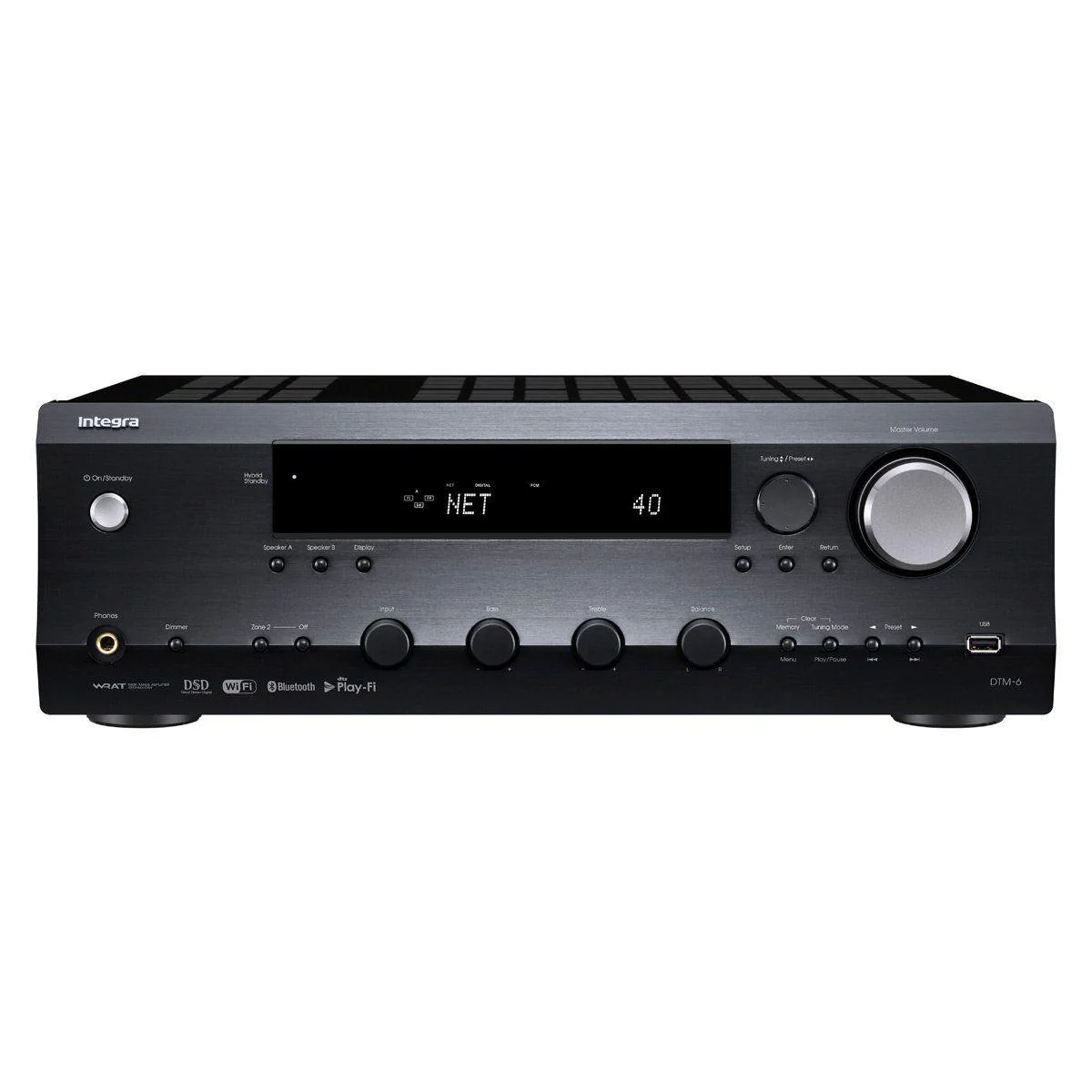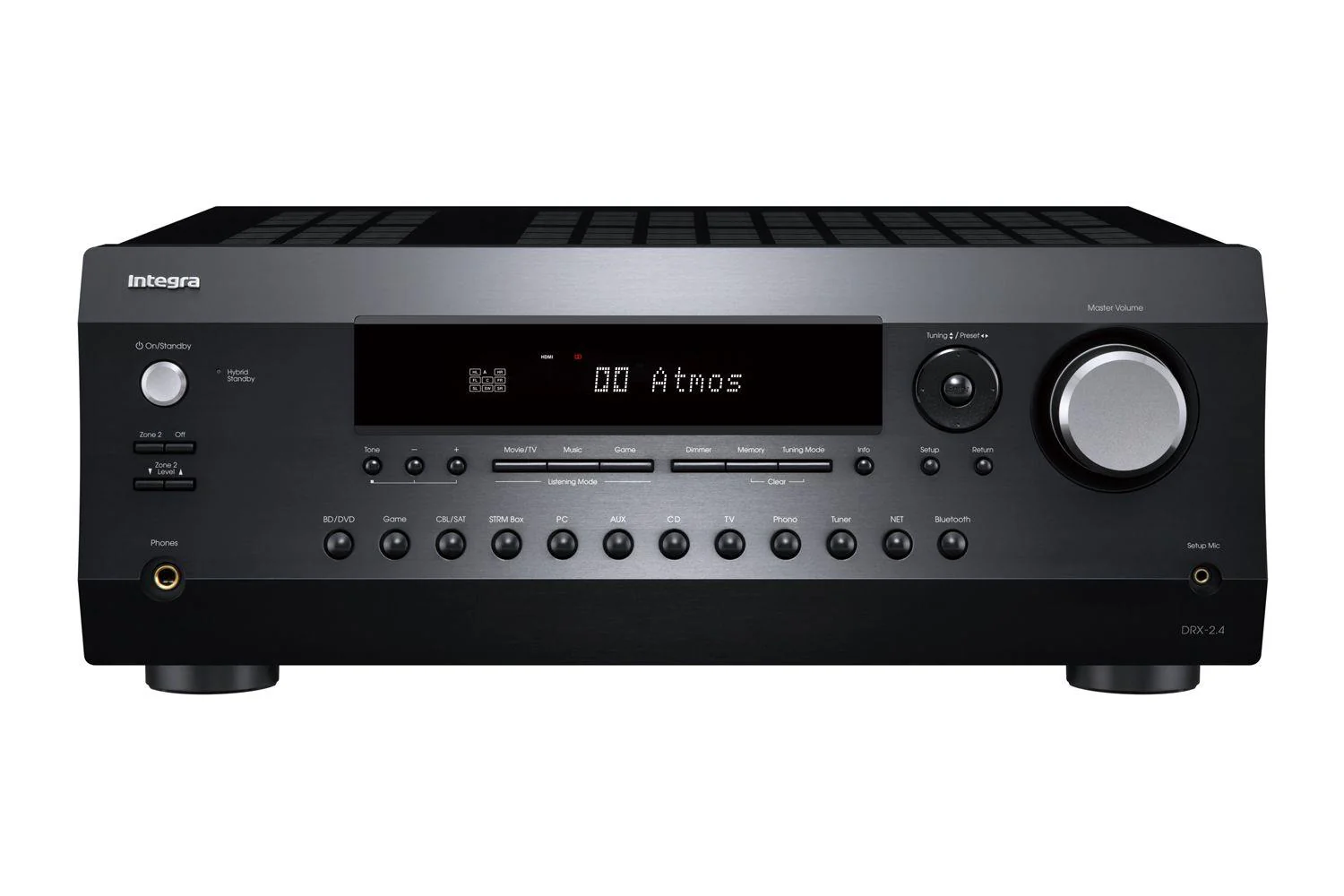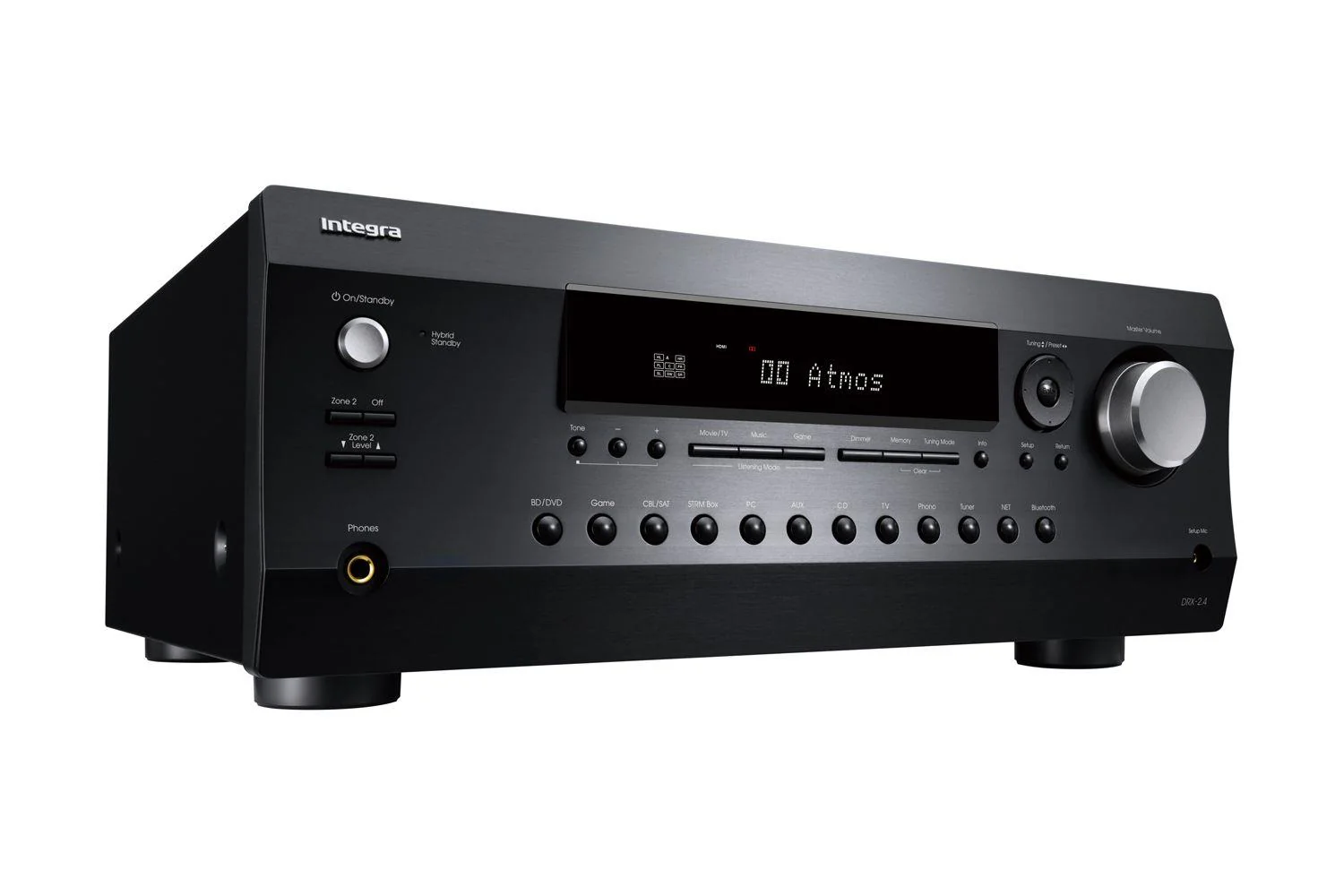

NAD C379 Integrated Amplifier
NAD C 379 HybridDigital DAC Amplifier
The NAD C 379 HybridDigital DAC Amplifier is built to be the “center of the system” for serious two-channel listening—powerful enough to drive real-world speakers with ease, and flexible enough to handle everything from vinyl and TV audio to high-resolution digital sources. At its core is NAD’s HybridDigital UcD amplification in a fully balanced bridge configuration, delivering clean, dynamic power with excellent control and low noise across the volume range. A high-performance ESS SABRE DAC anchors the digital side, revealing finer detail, wider dynamics, and more precise imaging from your favorite music.
Connectivity is designed for modern living: HDMI eARC brings your TV into the hi-fi world with simple, seamless control, while optical and coaxial inputs accommodate streamers, disc players, and consoles. For analog lovers, the moving-magnet phono stage delivers accurate RIAA equalization with ultra-low noise. Dual independent subwoofer outputs make bass integration easy, and the dedicated headphone amplifier provides the voltage and low output impedance needed to drive a wide range of headphones confidently.
Future-proofing is where the C 379 really stands out. Two MDC2 expansion slots let you add optional next-generation upgrades—like BluOS high-resolution multi-room streaming and Dirac Live Room Correction—so your amplifier can evolve along with your system for years to come.
The NAD C379 is part of ListenUp's NAD Integrated Amplifiers Collection.
What It's Good At:
- Driving demanding speakers with 80W per channel of clean HybridDigital UcD power and strong dynamic headroom
- Turning TV sound into real hi-fi via HDMI eARC with simple system integration
- Delivering detailed, low-noise digital playback through an ESS SABRE 32-bit DAC architecture
- Supporting vinyl listening with a quiet, accurate MM phono stage and RIAA equalization
- Easy bass integration with dual independent subwoofer outputs
- Staying upgrade-ready with dual MDC2 slots for optional BluOS streaming and Dirac Live room correction
NAD C 379 Full Specifications:
- Amplifier Topology: HybridDigital UcD amplifier design; fully balanced bridge configuration; Stereo and Bridge (Mono) modes
-
Power Output & Performance (Line In, Speaker Out — Analog Bypass On):
- Continuous output power into 8 ohms: 80W (20 Hz–20 kHz at rated THD, both channels driven)
- Continuous output power into 8 ohms (Bridge mode): >300W
- THD (20 Hz–20 kHz): <0.03% (250 mW to 120 W, 8 ohms and 4 ohms)
- Signal-to-noise ratio: >85 dB (A-weighted, 500 mV input, ref. 1 W out in 8 ohms)
- Clipping power: >110W (at 1 kHz, 0.1% THD)
- IHF dynamic power: 8 ohms: 140W; 4 ohms: 250W; 2 ohms: 260W
- Peak output current: >20A (in 1 ohm, 1 ms)
- Damping factor: >300 (ref. 8 ohms, 20 Hz to 6.5 kHz)
- Frequency response: ±0.3 dB (20 Hz–20 kHz)
- Channel separation: >75 dB (1 kHz); >70 dB (10 kHz)
- Input sensitivity (for 80 W in 8 ohms): Line In: 440 mV
-
Line Input / Pre-Out (Analog Bypass On):
- THD (20 Hz–20 kHz): <0.002% at 2 V out
- Signal-to-noise ratio: >106 dB (IHF; A-weighted, ref. 500 mV out, unity gain)
- Channel separation: >100 dB (1 kHz); >90 dB (10 kHz)
- Input impedance (R and C): 56.2 kohms + 100 pF
- Maximum input signal: >4.6 Vrms (ref. 0.1% THD)
- Output impedance: Source Z + 320 ohms
- Input sensitivity: 257 mV (ref. 500 mV out, Volume maximum)
- Frequency response: ±0.3 dB (20 Hz–20 kHz)
- Maximum voltage output (IHF load): >4.5 V (ref. 0.1% THD)
-
Phono Input / Pre-Out (Analog Bypass On):
- Moving Magnet (MM) phono stage
- THD (20 Hz–20 kHz): <0.01% at 2 V out
- Signal-to-noise ratio: >83 dB (200 ohms source; A-weighted, ref. 500 mV out)
- Input impedance (R and C): 46 kohms / 100 pF
- Input sensitivity: 4.2 mV (ref. 500 mV out, Volume maximum)
- Frequency response (RIAA): ±0.3 dB (20 Hz–20 kHz)
- Maximum input signal at 1 kHz: >80 mVrms (ref. 0.1% THD)
-
Headphone Output (Line Input, Headphone Out — Analog Bypass On):
- THD (20 Hz–20 kHz): <0.002% at 1 V out
- Signal-to-noise ratio: >101 dB (32 ohm loads; A-weighted, ref. 1 V out, unity gain)
- Frequency response: ±0.3 dB (20 Hz–20 kHz)
- Channel separation: >62 dB at 1 kHz
- Output impedance: 2.2 ohms
-
Digital Audio:
- DAC: ESS SABRE architecture (ES9028 referenced)
- DAC capability: 32-bit / up to 384 kHz
- Supported bit rate/sample rate (input support): up to 24-bit / 192 kHz
- Inputs: HDMI eARC; Optical digital; Coaxial digital
-
Wireless / Bluetooth:
- Bluetooth codec support: aptX HD
- Frequency band: 2.402G – 2.480G
- Maximum transmit power: 7 dBm ± 2 dBm
-
Expansion / Upgradability:
- Dual MDC2 expansion slots
- Optional upgrade support (via module): BluOS high-resolution streaming; Dirac Live Room Correction
-
Outputs & System Integration:
- Dual independent subwoofer outputs
-
Power Consumption:
- Standby power: <0.5W
- Network standby power: <2W
-
Dimensions & Weight:
- Gross dimensions (W x H x D): 435 x 100 x 410 mm (17 1/4 x 4 x 16 3/16 inches)
- Net weight: 9.04 kg
- Shipping weight: 10.88 kg
NAD C 379 Q&A:
- How much power does the NAD C 379 deliver, and is it enough for demanding speakers?
- The C 379 delivers 80W per channel into 8 ohms (both channels driven), with strong dynamic power for musical peaks—making it well-suited for a wide range of bookshelf and floorstanding speakers.
- Can I connect my TV to the C 379 and control it easily?
- Yes. HDMI eARC lets you connect a compatible TV for improved sound quality and convenient system control through your TV’s remote (depending on TV capabilities).
- Does the C 379 have a phono input for a turntable?
- Yes. It includes a Moving Magnet phono stage with accurate RIAA equalization and low-noise performance for vinyl playback.
- What digital inputs are available for streamers and disc players?
- The C 379 includes HDMI eARC, optical digital, and coaxial digital inputs for flexible digital source connectivity.
- Can I add streaming and room correction later?
- Yes. The dual MDC2 expansion slots allow optional upgrades such as BluOS high-resolution streaming and Dirac Live Room Correction via compatible modules.
- Does it support Bluetooth streaming from a phone or tablet?
- Yes. Built-in Bluetooth supports aptX HD for higher-quality wireless audio when paired with compatible devices.
- Can I run one or two subwoofers with the C 379?
- Yes. It provides two independent subwoofer outputs, making it easy to integrate one or two subs for better bass performance.
- Is the headphone output powerful enough for high-quality headphones?
- Yes. The dedicated headphone amplifier is designed with low output impedance and strong output capability to drive a wide range of headphone types.
NAD C 379 Downloads:
NAD C 379 Manual
NAD C 379 Data Sheet
Original: $1,499.00
-65%$1,499.00
$524.65More Images


NAD C379 Integrated Amplifier
NAD C 379 HybridDigital DAC Amplifier
The NAD C 379 HybridDigital DAC Amplifier is built to be the “center of the system” for serious two-channel listening—powerful enough to drive real-world speakers with ease, and flexible enough to handle everything from vinyl and TV audio to high-resolution digital sources. At its core is NAD’s HybridDigital UcD amplification in a fully balanced bridge configuration, delivering clean, dynamic power with excellent control and low noise across the volume range. A high-performance ESS SABRE DAC anchors the digital side, revealing finer detail, wider dynamics, and more precise imaging from your favorite music.
Connectivity is designed for modern living: HDMI eARC brings your TV into the hi-fi world with simple, seamless control, while optical and coaxial inputs accommodate streamers, disc players, and consoles. For analog lovers, the moving-magnet phono stage delivers accurate RIAA equalization with ultra-low noise. Dual independent subwoofer outputs make bass integration easy, and the dedicated headphone amplifier provides the voltage and low output impedance needed to drive a wide range of headphones confidently.
Future-proofing is where the C 379 really stands out. Two MDC2 expansion slots let you add optional next-generation upgrades—like BluOS high-resolution multi-room streaming and Dirac Live Room Correction—so your amplifier can evolve along with your system for years to come.
The NAD C379 is part of ListenUp's NAD Integrated Amplifiers Collection.
What It's Good At:
- Driving demanding speakers with 80W per channel of clean HybridDigital UcD power and strong dynamic headroom
- Turning TV sound into real hi-fi via HDMI eARC with simple system integration
- Delivering detailed, low-noise digital playback through an ESS SABRE 32-bit DAC architecture
- Supporting vinyl listening with a quiet, accurate MM phono stage and RIAA equalization
- Easy bass integration with dual independent subwoofer outputs
- Staying upgrade-ready with dual MDC2 slots for optional BluOS streaming and Dirac Live room correction
NAD C 379 Full Specifications:
- Amplifier Topology: HybridDigital UcD amplifier design; fully balanced bridge configuration; Stereo and Bridge (Mono) modes
-
Power Output & Performance (Line In, Speaker Out — Analog Bypass On):
- Continuous output power into 8 ohms: 80W (20 Hz–20 kHz at rated THD, both channels driven)
- Continuous output power into 8 ohms (Bridge mode): >300W
- THD (20 Hz–20 kHz): <0.03% (250 mW to 120 W, 8 ohms and 4 ohms)
- Signal-to-noise ratio: >85 dB (A-weighted, 500 mV input, ref. 1 W out in 8 ohms)
- Clipping power: >110W (at 1 kHz, 0.1% THD)
- IHF dynamic power: 8 ohms: 140W; 4 ohms: 250W; 2 ohms: 260W
- Peak output current: >20A (in 1 ohm, 1 ms)
- Damping factor: >300 (ref. 8 ohms, 20 Hz to 6.5 kHz)
- Frequency response: ±0.3 dB (20 Hz–20 kHz)
- Channel separation: >75 dB (1 kHz); >70 dB (10 kHz)
- Input sensitivity (for 80 W in 8 ohms): Line In: 440 mV
-
Line Input / Pre-Out (Analog Bypass On):
- THD (20 Hz–20 kHz): <0.002% at 2 V out
- Signal-to-noise ratio: >106 dB (IHF; A-weighted, ref. 500 mV out, unity gain)
- Channel separation: >100 dB (1 kHz); >90 dB (10 kHz)
- Input impedance (R and C): 56.2 kohms + 100 pF
- Maximum input signal: >4.6 Vrms (ref. 0.1% THD)
- Output impedance: Source Z + 320 ohms
- Input sensitivity: 257 mV (ref. 500 mV out, Volume maximum)
- Frequency response: ±0.3 dB (20 Hz–20 kHz)
- Maximum voltage output (IHF load): >4.5 V (ref. 0.1% THD)
-
Phono Input / Pre-Out (Analog Bypass On):
- Moving Magnet (MM) phono stage
- THD (20 Hz–20 kHz): <0.01% at 2 V out
- Signal-to-noise ratio: >83 dB (200 ohms source; A-weighted, ref. 500 mV out)
- Input impedance (R and C): 46 kohms / 100 pF
- Input sensitivity: 4.2 mV (ref. 500 mV out, Volume maximum)
- Frequency response (RIAA): ±0.3 dB (20 Hz–20 kHz)
- Maximum input signal at 1 kHz: >80 mVrms (ref. 0.1% THD)
-
Headphone Output (Line Input, Headphone Out — Analog Bypass On):
- THD (20 Hz–20 kHz): <0.002% at 1 V out
- Signal-to-noise ratio: >101 dB (32 ohm loads; A-weighted, ref. 1 V out, unity gain)
- Frequency response: ±0.3 dB (20 Hz–20 kHz)
- Channel separation: >62 dB at 1 kHz
- Output impedance: 2.2 ohms
-
Digital Audio:
- DAC: ESS SABRE architecture (ES9028 referenced)
- DAC capability: 32-bit / up to 384 kHz
- Supported bit rate/sample rate (input support): up to 24-bit / 192 kHz
- Inputs: HDMI eARC; Optical digital; Coaxial digital
-
Wireless / Bluetooth:
- Bluetooth codec support: aptX HD
- Frequency band: 2.402G – 2.480G
- Maximum transmit power: 7 dBm ± 2 dBm
-
Expansion / Upgradability:
- Dual MDC2 expansion slots
- Optional upgrade support (via module): BluOS high-resolution streaming; Dirac Live Room Correction
-
Outputs & System Integration:
- Dual independent subwoofer outputs
-
Power Consumption:
- Standby power: <0.5W
- Network standby power: <2W
-
Dimensions & Weight:
- Gross dimensions (W x H x D): 435 x 100 x 410 mm (17 1/4 x 4 x 16 3/16 inches)
- Net weight: 9.04 kg
- Shipping weight: 10.88 kg
NAD C 379 Q&A:
- How much power does the NAD C 379 deliver, and is it enough for demanding speakers?
- The C 379 delivers 80W per channel into 8 ohms (both channels driven), with strong dynamic power for musical peaks—making it well-suited for a wide range of bookshelf and floorstanding speakers.
- Can I connect my TV to the C 379 and control it easily?
- Yes. HDMI eARC lets you connect a compatible TV for improved sound quality and convenient system control through your TV’s remote (depending on TV capabilities).
- Does the C 379 have a phono input for a turntable?
- Yes. It includes a Moving Magnet phono stage with accurate RIAA equalization and low-noise performance for vinyl playback.
- What digital inputs are available for streamers and disc players?
- The C 379 includes HDMI eARC, optical digital, and coaxial digital inputs for flexible digital source connectivity.
- Can I add streaming and room correction later?
- Yes. The dual MDC2 expansion slots allow optional upgrades such as BluOS high-resolution streaming and Dirac Live Room Correction via compatible modules.
- Does it support Bluetooth streaming from a phone or tablet?
- Yes. Built-in Bluetooth supports aptX HD for higher-quality wireless audio when paired with compatible devices.
- Can I run one or two subwoofers with the C 379?
- Yes. It provides two independent subwoofer outputs, making it easy to integrate one or two subs for better bass performance.
- Is the headphone output powerful enough for high-quality headphones?
- Yes. The dedicated headphone amplifier is designed with low output impedance and strong output capability to drive a wide range of headphone types.
NAD C 379 Downloads:
NAD C 379 Manual
NAD C 379 Data Sheet
Product Information
Product Information
Shipping & Returns
Shipping & Returns
Description
NAD C 379 HybridDigital DAC Amplifier
The NAD C 379 HybridDigital DAC Amplifier is built to be the “center of the system” for serious two-channel listening—powerful enough to drive real-world speakers with ease, and flexible enough to handle everything from vinyl and TV audio to high-resolution digital sources. At its core is NAD’s HybridDigital UcD amplification in a fully balanced bridge configuration, delivering clean, dynamic power with excellent control and low noise across the volume range. A high-performance ESS SABRE DAC anchors the digital side, revealing finer detail, wider dynamics, and more precise imaging from your favorite music.
Connectivity is designed for modern living: HDMI eARC brings your TV into the hi-fi world with simple, seamless control, while optical and coaxial inputs accommodate streamers, disc players, and consoles. For analog lovers, the moving-magnet phono stage delivers accurate RIAA equalization with ultra-low noise. Dual independent subwoofer outputs make bass integration easy, and the dedicated headphone amplifier provides the voltage and low output impedance needed to drive a wide range of headphones confidently.
Future-proofing is where the C 379 really stands out. Two MDC2 expansion slots let you add optional next-generation upgrades—like BluOS high-resolution multi-room streaming and Dirac Live Room Correction—so your amplifier can evolve along with your system for years to come.
The NAD C379 is part of ListenUp's NAD Integrated Amplifiers Collection.
What It's Good At:
- Driving demanding speakers with 80W per channel of clean HybridDigital UcD power and strong dynamic headroom
- Turning TV sound into real hi-fi via HDMI eARC with simple system integration
- Delivering detailed, low-noise digital playback through an ESS SABRE 32-bit DAC architecture
- Supporting vinyl listening with a quiet, accurate MM phono stage and RIAA equalization
- Easy bass integration with dual independent subwoofer outputs
- Staying upgrade-ready with dual MDC2 slots for optional BluOS streaming and Dirac Live room correction
NAD C 379 Full Specifications:
- Amplifier Topology: HybridDigital UcD amplifier design; fully balanced bridge configuration; Stereo and Bridge (Mono) modes
-
Power Output & Performance (Line In, Speaker Out — Analog Bypass On):
- Continuous output power into 8 ohms: 80W (20 Hz–20 kHz at rated THD, both channels driven)
- Continuous output power into 8 ohms (Bridge mode): >300W
- THD (20 Hz–20 kHz): <0.03% (250 mW to 120 W, 8 ohms and 4 ohms)
- Signal-to-noise ratio: >85 dB (A-weighted, 500 mV input, ref. 1 W out in 8 ohms)
- Clipping power: >110W (at 1 kHz, 0.1% THD)
- IHF dynamic power: 8 ohms: 140W; 4 ohms: 250W; 2 ohms: 260W
- Peak output current: >20A (in 1 ohm, 1 ms)
- Damping factor: >300 (ref. 8 ohms, 20 Hz to 6.5 kHz)
- Frequency response: ±0.3 dB (20 Hz–20 kHz)
- Channel separation: >75 dB (1 kHz); >70 dB (10 kHz)
- Input sensitivity (for 80 W in 8 ohms): Line In: 440 mV
-
Line Input / Pre-Out (Analog Bypass On):
- THD (20 Hz–20 kHz): <0.002% at 2 V out
- Signal-to-noise ratio: >106 dB (IHF; A-weighted, ref. 500 mV out, unity gain)
- Channel separation: >100 dB (1 kHz); >90 dB (10 kHz)
- Input impedance (R and C): 56.2 kohms + 100 pF
- Maximum input signal: >4.6 Vrms (ref. 0.1% THD)
- Output impedance: Source Z + 320 ohms
- Input sensitivity: 257 mV (ref. 500 mV out, Volume maximum)
- Frequency response: ±0.3 dB (20 Hz–20 kHz)
- Maximum voltage output (IHF load): >4.5 V (ref. 0.1% THD)
-
Phono Input / Pre-Out (Analog Bypass On):
- Moving Magnet (MM) phono stage
- THD (20 Hz–20 kHz): <0.01% at 2 V out
- Signal-to-noise ratio: >83 dB (200 ohms source; A-weighted, ref. 500 mV out)
- Input impedance (R and C): 46 kohms / 100 pF
- Input sensitivity: 4.2 mV (ref. 500 mV out, Volume maximum)
- Frequency response (RIAA): ±0.3 dB (20 Hz–20 kHz)
- Maximum input signal at 1 kHz: >80 mVrms (ref. 0.1% THD)
-
Headphone Output (Line Input, Headphone Out — Analog Bypass On):
- THD (20 Hz–20 kHz): <0.002% at 1 V out
- Signal-to-noise ratio: >101 dB (32 ohm loads; A-weighted, ref. 1 V out, unity gain)
- Frequency response: ±0.3 dB (20 Hz–20 kHz)
- Channel separation: >62 dB at 1 kHz
- Output impedance: 2.2 ohms
-
Digital Audio:
- DAC: ESS SABRE architecture (ES9028 referenced)
- DAC capability: 32-bit / up to 384 kHz
- Supported bit rate/sample rate (input support): up to 24-bit / 192 kHz
- Inputs: HDMI eARC; Optical digital; Coaxial digital
-
Wireless / Bluetooth:
- Bluetooth codec support: aptX HD
- Frequency band: 2.402G – 2.480G
- Maximum transmit power: 7 dBm ± 2 dBm
-
Expansion / Upgradability:
- Dual MDC2 expansion slots
- Optional upgrade support (via module): BluOS high-resolution streaming; Dirac Live Room Correction
-
Outputs & System Integration:
- Dual independent subwoofer outputs
-
Power Consumption:
- Standby power: <0.5W
- Network standby power: <2W
-
Dimensions & Weight:
- Gross dimensions (W x H x D): 435 x 100 x 410 mm (17 1/4 x 4 x 16 3/16 inches)
- Net weight: 9.04 kg
- Shipping weight: 10.88 kg
NAD C 379 Q&A:
- How much power does the NAD C 379 deliver, and is it enough for demanding speakers?
- The C 379 delivers 80W per channel into 8 ohms (both channels driven), with strong dynamic power for musical peaks—making it well-suited for a wide range of bookshelf and floorstanding speakers.
- Can I connect my TV to the C 379 and control it easily?
- Yes. HDMI eARC lets you connect a compatible TV for improved sound quality and convenient system control through your TV’s remote (depending on TV capabilities).
- Does the C 379 have a phono input for a turntable?
- Yes. It includes a Moving Magnet phono stage with accurate RIAA equalization and low-noise performance for vinyl playback.
- What digital inputs are available for streamers and disc players?
- The C 379 includes HDMI eARC, optical digital, and coaxial digital inputs for flexible digital source connectivity.
- Can I add streaming and room correction later?
- Yes. The dual MDC2 expansion slots allow optional upgrades such as BluOS high-resolution streaming and Dirac Live Room Correction via compatible modules.
- Does it support Bluetooth streaming from a phone or tablet?
- Yes. Built-in Bluetooth supports aptX HD for higher-quality wireless audio when paired with compatible devices.
- Can I run one or two subwoofers with the C 379?
- Yes. It provides two independent subwoofer outputs, making it easy to integrate one or two subs for better bass performance.
- Is the headphone output powerful enough for high-quality headphones?
- Yes. The dedicated headphone amplifier is designed with low output impedance and strong output capability to drive a wide range of headphone types.
NAD C 379 Downloads:
NAD C 379 Manual
NAD C 379 Data Sheet